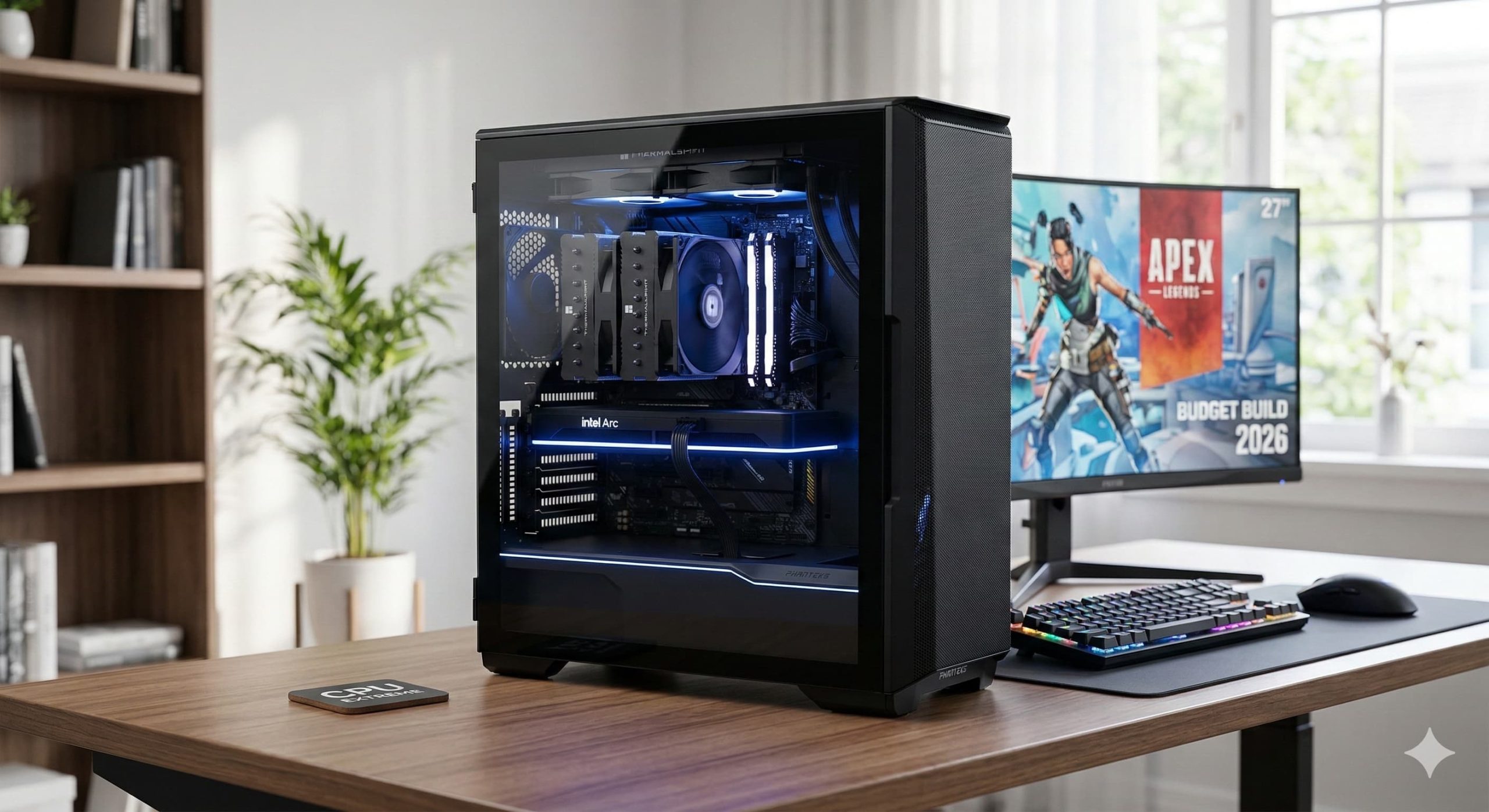
If you have been pricing out components lately, you know the hardware landscape is a bit of a wild west right now. Having just wrapped up sourcing parts and assembling a budget gaming PC myself a few weeks ago, I know exactly how frustrating it can be to find that perfect sweet spot between cost and actual, playable performance.
With the recent spikes in DDR5 memory prices—what the community is already calling the 2026 ‘RAMpocalypse’—and the rollout of the new Nvidia RTX 50-series and AMD RX 9000-series GPUs, the definition of a ‘budget’ rig has officially shifted. You can’t just throw the cheapest parts into a cart and hope for the best anymore; you have to be highly strategic.
Here is exactly how to build a capable 1080p and entry-level 1440p gaming PC in 2026 without destroying your bank account.
The Foundation: Why AM4 is Still the Budget King
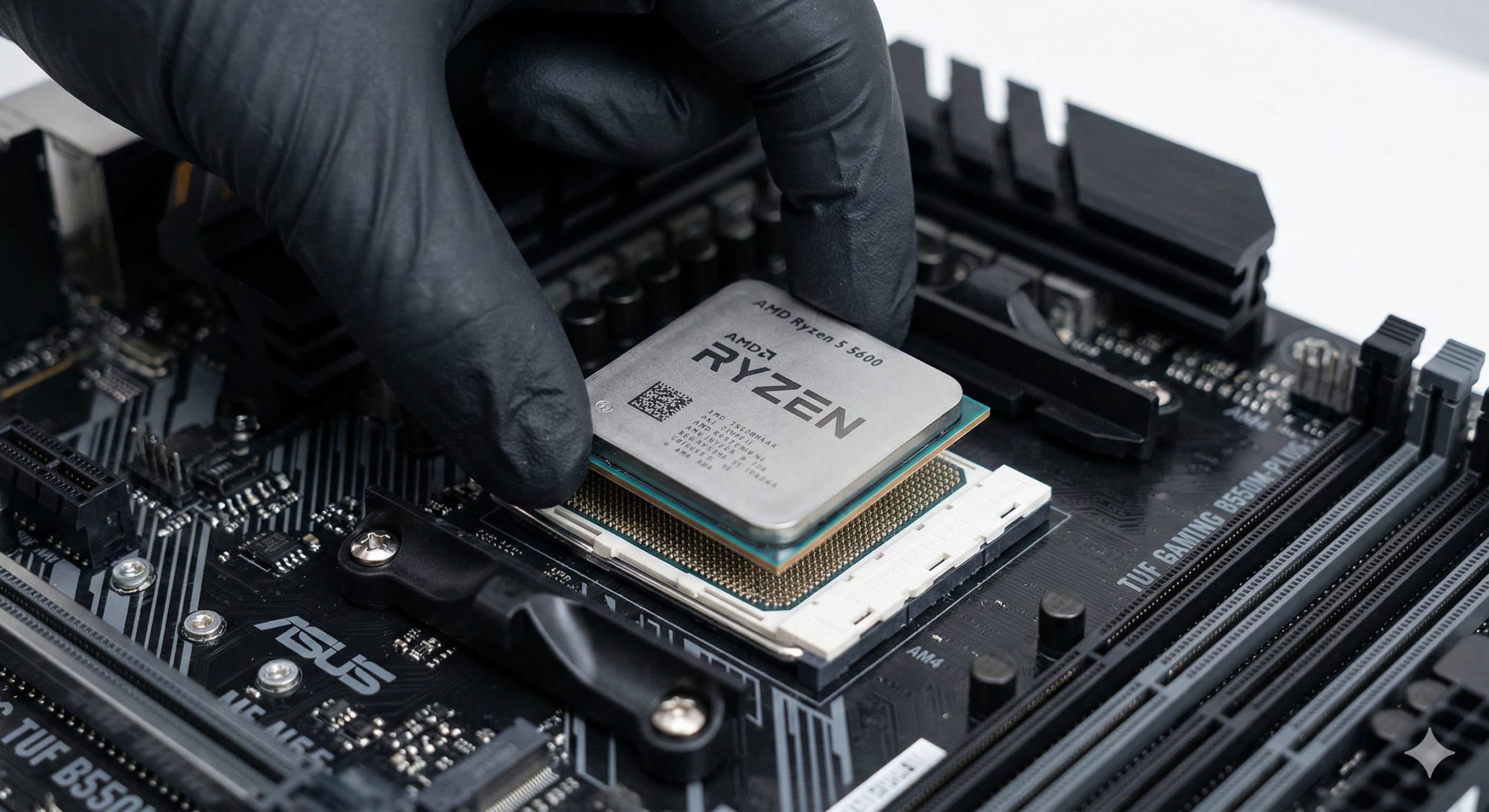
It is incredibly tempting to try and force a newer AM5 motherboard and a Ryzen 5 7600X into a budget build. However, once you factor in the currently inflated cost of the required DDR5 memory, your budget will completely evaporate before you even look at graphics cards.
For a true value build today, the AMD Ryzen 5 5600 is still the undisputed champion. It is a 6-core, 12-thread workhorse that delivers exactly what you need for modern titles. Paired with a solid, no-frills B550 motherboard, you get excellent gaming performance and full access to highly affordable DDR4 RAM. This strategy keeps your core platform costs incredibly low, freeing up the majority of your cash for the single most important component of the build: the GPU.
The GPU Dilemma: Making the Right Call in 2026
If the CPU is the brain of your operation, the GPU is the muscle, and this is where you should be funneling the bulk of your budget. Right now, budget builders are facing a classic three-way standoff:
Nvidia RTX 5060 (~$299): Nvidia’s entry-level 50-series is a masterclass in software trickery. While it is frustrating that they are still shipping 8GB of VRAM in 2026, the inclusion of DLSS 4 and Multi-Frame Generation allows this card to punch well above its weight in supported titles.
AMD RX 9060 XT (~$320): AMD continues to be the king of raw rasterization value. It generally outperforms the 5060 in pure, unscaled frame rates and offers a slightly better memory buffer.
Intel Arc B580 (~$250): The true dark horse of 2026. Intel’s Battlemage architecture completely redeemed their GPU lineup. For just $250, you get a massive 12GB of VRAM, which is virtually unheard of at this price point.
Surviving the ‘RAMpocalypse’
As I mentioned earlier, DDR5 prices are currently experiencing a nasty spike. The beauty of sticking with our AM4 B550 motherboard is that we get to completely bypass this headache. Instead of overpaying for 16GB of entry-level DDR5, you can grab a high-quality 32GB kit of DDR4-3200 MT/s for around $55.
Storage, Cooling, & Power: Don’t Cut the Wrong Corners
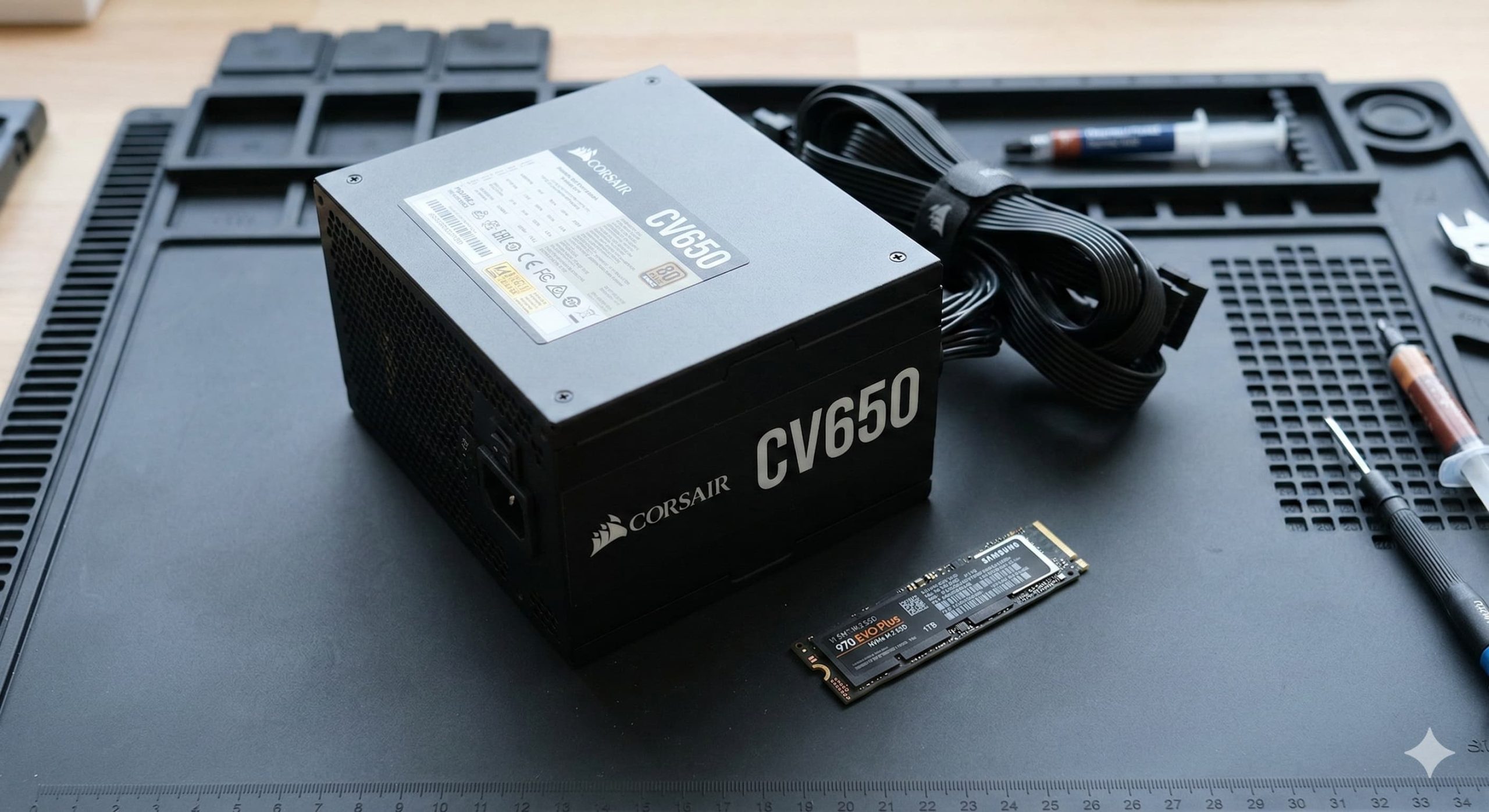
When you are trying to keep costs down, it is tempting to buy a suspicious, no-name power supply. Don’t do it.
Power Supply: A solid 650W 80+ Bronze unit from a reputable brand will cost you about $70.
Cooling: The Ryzen 5600 does not run particularly hot, but skip the stock cooler. Drop $35 on a Thermalright Phantom Spirit or Peerless Assassin.
Storage: Snag a 1TB Gen3 or Gen4 NVMe SSD. They are currently hovering around $65.
The Final Parts List (Estimated Costs)
- CPU: AMD Ryzen 5 5600 – $115
- Motherboard: Budget B550 – $95
- RAM: 32GB (2x16GB) DDR4-3200 – $55
- GPU: Intel Arc B580 12GB – $250
- Storage: 1TB NVMe M.2 SSD – $65
- Cooler: Thermalright Phantom Spirit 120 – $35
- Power Supply: 650W 80+ Bronze – $70
- Case: High-airflow budget ATX – $65
Total Cost: ~$750
Expected Performance
For about $750, this rig is a 1080p monster. You will easily clear 100+ FPS in competitive esports titles on maximum settings. For heavier, modern AAA games, you can expect a rock-solid 60+ FPS at 1080p High.